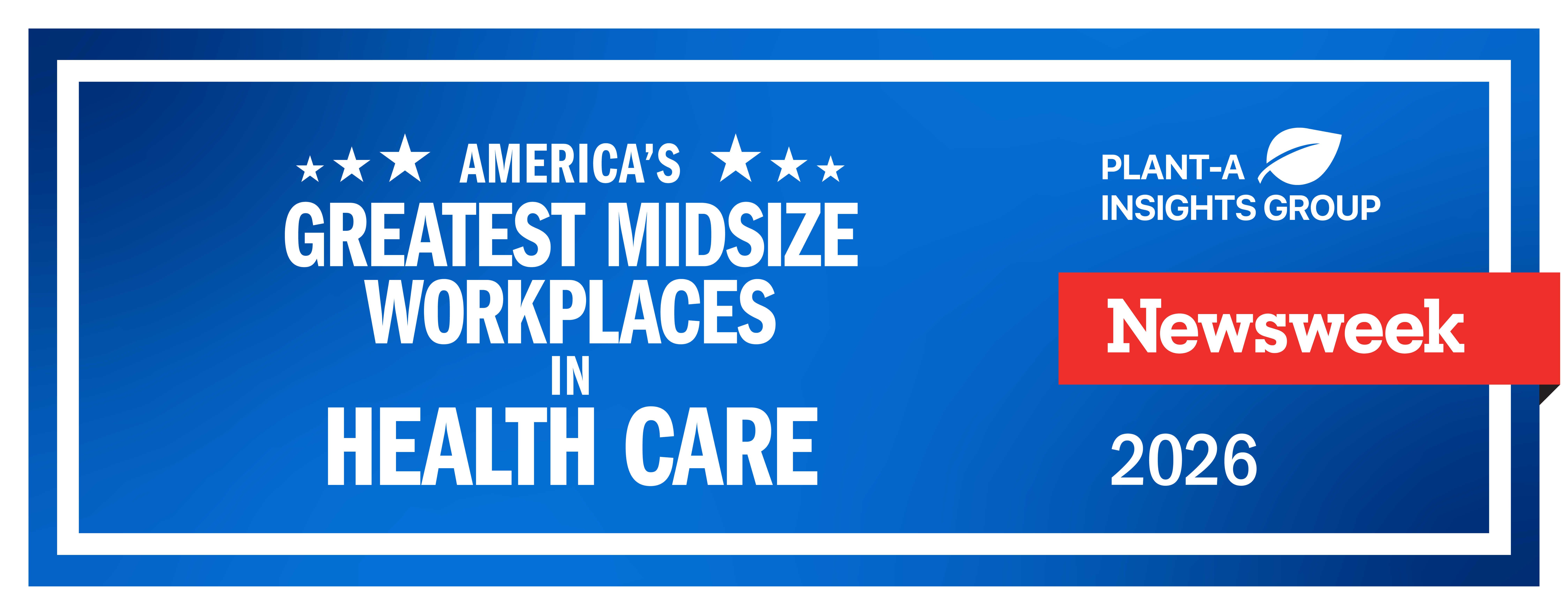
 Rome Health has been recognized by Newsweek as one of America’s Greatest Midsize Workplaces in Health Care 2026, a distinction that honors employers demonstrating excellence in workplace culture, employee satisfaction and ethical business practices.
The ranking was developed by Newsweek in partnership with Plant-A Insights and Aniline, a leading HR analytics company. The evaluation analyzed more than 1.3 million online employee reviews from U.S.-based organizations and assessed companies across six key pillars, including work-life balance, compensation and benefits, career development and workplace culture.
“This recognition reflects the voices and experiences of our employees and affirms our focus on creating an environment where our colleagues feel supported, valued, and empowered to deliver exceptional care,” said Rome Health President | CEO AnneMarie Czyz, Ed.D., RN. “Investing in employees—through professional development, open communication, leadership accessibility, and a culture of continuous support—directly strengthens patient care. In a demanding healthcare environment, we believe that when employees feel heard and supported, they are better able to provide compassionate, high-quality care to the communities we serve.”
At Rome Health, daily tiered huddles create a structured process for frontline staff to lead from the point of care or service by sharing insights, escalate concerns, and highlight opportunities in real time. In addition, weekly executive leadership rounds provide another opportunity for direct dialogue. These conversations allow administrative leaders to hear firsthand about challenges, recognize successes, and identify opportunities to improve the care environment.
"In a landscape where health care professionals are increasingly prone to burnout, the organizations that prioritize their people are the ones that will ultimately redefine patient care. Newsweek’s ranking of America’s Greatest Midsize Workplaces in Health Care 2026 highlights the employers who understand that a thriving workforce is the heartbeat of a successful institution. By rigorously analyzing data through the lens of those on the front lines, we aim to provide a roadmap for employees seeking fulfillment and a gold standard for employers striving to build cultures of belonging, excellence, and long-term growth." – Jennifer Cunningham, Newsweek Editor-in-Chief.
America’s Greatest Midsize Workplaces in Health Care 2026 e-Interview
In conversations with Newsweek, AnneMarie Czyz, Ed.D.,RN, President/CEO answered the following questions:
1. What initiatives does your organization have in place to support employee well-being and resilience, particularly in a demanding health care environment?
Rome Health is committed to supporting employee well-being and resilience, recognizing that a strong, supported workforce is essential in today’s demanding healthcare environment. We have implemented a comprehensive approach that focuses on preparation, professional growth, communication, and a culture of continuous support.
Rome Health’s RN Transition to Practice Program and Nurse Extern Programs are foundational initiatives designed to build confidence and competence among new graduate nurses. These structured programs provide mentorship, hands-on experience, and gradual skill development to help nurses successfully transition into practice. By creating a supportive learning environment, these programs reduce stress, strengthen clinical confidence, and improve retention while ensuring high-quality patient care.
Ongoing professional development is another key component of employee well-being. Rome Health supports continuing education, specialty certification, and career advancement opportunities for clinical and non-clinical staff. Employees are encouraged to expand their skills and pursue professional growth, which enhances engagement, job satisfaction, and long-term resilience. These efforts align with Rome Health’s pursuit of Magnet recognition, a nationally recognized standard for nursing excellence that emphasizes professional development, shared governance, a supportive practice environment, and ultimately excellent patient outcomes.
Rome Health leaders also prioritize proactive communication and employee engagement. Leaders conduct regular stay interviews to better understand what motivates employees, identify potential challenges, and address concerns before they impact retention or morale. In addition, tiered daily huddles create a structured communication pathway that allows frontline staff to elevate issues quickly and ensure timely problem solving.
Weekly executive leadership rounds further reinforce this commitment. Senior leaders meet directly with staff across departments to listen, gather feedback, and address concerns in real time. This visible leadership presence fosters trust, strengthens engagement, and ensures employees feel heard and supported.
Together, these initiatives create a culture where employees feel valued, prepared, and supported—helping Rome Health maintain a resilient workforce capable of delivering exceptional care in a demanding healthcare environment.
2. How does your organization address work-life balance for health care professionals with varied schedules and responsibilities?
Rome Health supports work-life balance by promoting sustainable scheduling and flexibility for healthcare professionals. Leaders actively encourage employees to use their earned paid time off and work to minimize overtime whenever possible, helping reduce burnout and support overall well-being in a demanding care environment.
Rome Health also offers flexible employment options, including full-time, part-time, and per diem opportunities, allowing employees to choose schedules that best fit their personal and family responsibilities.
These efforts help create a supportive environment where employees have flexibility, time to recharge, and the resources needed to maintain balance while delivering high-quality patient care.
3. What do you believe sets your organization apart as an employer within the midsize health care sector?
Rome Health is distinguished as an employer by its culture of continuous support, strong investment in people, and commitment to open, transparent communication. In a rapidly changing healthcare environment, leaders at Rome Health work side by side with frontline staff—at the elbow during times of change and crisis—ensuring employees feel supported, heard, and empowered to deliver the best possible care.
Frontline staff play a critical role in shaping decisions across the organization. Rome Health actively engages employees in planning, problem-solving, and innovation, recognizing that those closest to patient care offer invaluable insight. This collaborative approach strengthens engagement, improves outcomes, and reinforces a shared sense of purpose.
A strong example of this commitment was the design of Rome Health’s new ICU and Kaplan Center for Surgical Services. Frontline nurses, physicians, clinical and support staff were directly involved in early visioning sessions to identify opportunities to improve workflow, patient safety, and care delivery. Rome Health also constructed a full-scale mock-up of key spaces, allowing staff to walk through the environment and provide feedback before construction began. Their input helped shape the final design, ensuring the new spaces truly supported both patients and caregivers.
By investing in people, listening to frontline voices, and maintaining visible, supportive leadership, Rome Health fosters a workplace culture where employees feel valued, engaged, and prepared to navigate the demands of modern healthcare.
4. How does employee feedback shape leadership decisions and workplace improvements at your organization?
At Rome Health, the voice of the employee is essential to fulfilling our promise to provide the best care out there, here. We believe the individuals closest to patient care are best positioned to identify opportunities for improvement, strengthen workflows, and enhance both the patient and employee experience. As a result, employee feedback is a central role in shaping leadership decisions and workplace improvements.
Daily tiered huddles create a structured process for frontline staff to share insights, escalate concerns, and highlight opportunities in real time. Issues identified at the department level are elevated through leadership tiers, allowing barriers to be addressed quickly and solutions implemented efficiently. This approach not only improves operations but also reinforces a culture where employees know their voices matter.
In addition, weekly executive leadership rounds provide another opportunity for direct dialogue between senior leaders and staff across the organization. These conversations allow leaders to hear firsthand about challenges, recognize successes, and identify opportunities to improve the care environment. Feedback gathered during these rounds often informs operational adjustments, resource allocation, and strategic priorities.
By consistently listening to employees and acting on their feedback, Rome Health continuously refines its processes, strengthens teamwork, and enhances the care environment. This commitment ensures that both patients and teammates benefit from a workplace designed to support excellence, collaboration, and compassionate care.
5. What does being recognized by Newsweek as one of America’s Greatest Midsize Workplaces in Health Care mean to your organization?
Being recognized by Newsweek as one of America’s Greatest Midsize Workplaces in Health Care is a meaningful acknowledgment of Rome Health’s commitment to its people and the culture we are intentionally building. This recognition reflects the voices and experiences of our employees and affirms our focus on creating an environment where caregivers feel supported, valued, and empowered to deliver exceptional care.
For Rome Health, this honor reinforces that investing in employees—through professional development, open communication, leadership accessibility, and a culture of continuous support—directly strengthens patient care. In a demanding healthcare environment, we believe that when employees feel heard and supported, they are better able to provide compassionate, high-quality care to the communities we serve.
This recognition also validates the collaborative culture that defines Rome Health, where administrative and frontline teams lead, employee feedback shapes decisions, and all levels of the organization work together to navigate change. It reflects our commitment to fostering a workplace where people want to build careers, grow professionally, and contribute to improving healthcare close to home.